Guides
Selling Photo Booths at Trade Shows: Setup and Lead Capture
Selling photo booths at trade shows takes audience-fit props, a live demo, badge capture, fast photo delivery, and timely follow-up to generate rental leads.
What to take away
- Booth space, drayage, labor, power, and insurance are separate line items, each priced in the show's exhibitor manual.
- Lead capture works best when you scan badges and send photos fast.
- Props should be washable, sturdy, and easy to pack.
- ROI depends on cost per qualified lead, not booth traffic alone.
Selling photo booths at trade shows can help photo booth rental owners. The props, booth setup, and lead capture steps work when you promote rental packages at bridal shows, corporate expos, and event vendor fairs.
Treat your trade show display as a live demo of the photo booth event props you rent. Clean hats, sturdy frames, and fast photo delivery show clients what they get. Use the setup and follow-up steps to book more rental jobs, not just to sell hardware.
Planning Booth Space at US Trade Shows
A US trade show booth is a rental of floor space, not a room. You pay per square foot, and the rate changes by city, hall, and show. Corner and island booths cost more than inline spaces.
Booth Cost Drivers
Cost item
- Booth space
- Aisle vs island
- Drayage
- Weight, crates
- Labor
- Union rules
- Utilities
- Power, internet
- Props
- Quantity, durability
What drives it
- Booth space
- Book early
- Drayage
- Ship consolidated
- Labor
- Check contractor rules
- Utilities
- Order in advance
- Props
- Use washable items
Planning note
- Booth space
- Drayage
- Labor
- Utilities
- Props
Drayage is the move from the dock to your booth. It is billed by weight or crate count. Union labor rules can require you to hire riggers or electricians. Power, internet, and carpet are separate orders. Insurance and badges add more line items.
Major venues like McCormick Place in Chicago and the Las Vegas Convention Center set their own service rules. Check the exhibitor manual for each venue.
Budget for drayage and labor before you sign the booth contract.
Depreciation and Section 179 rules can change the true cost of a booth and props. Under IRS Publication 946 on depreciation, for tax years beginning in 2026 the maximum section 179 expense deduction is $2,560,000 and is reduced by the amount by which section 179 property placed in service that year costs more than $4,090,000. A tax advisor can help you decide what to buy and what to rent.
Booth Space Costs
| Cost item | What drives it | Planning note |
|---|---|---|
| Booth space | Aisle vs island, corner, hall | Book early; rates vary by city and show |
| Drayage | Weight and number of crates | Ship consolidated; label every case |
| Labor | Union rules, setup hours | Check show contractor rules before shipping |
| Utilities | Power, internet, rigging | Order in advance; on-site rates are higher |
| Props | Quantity, durability, packing | Use washable, reusable items |
Choosing Props That Pull Exhibitor Traffic
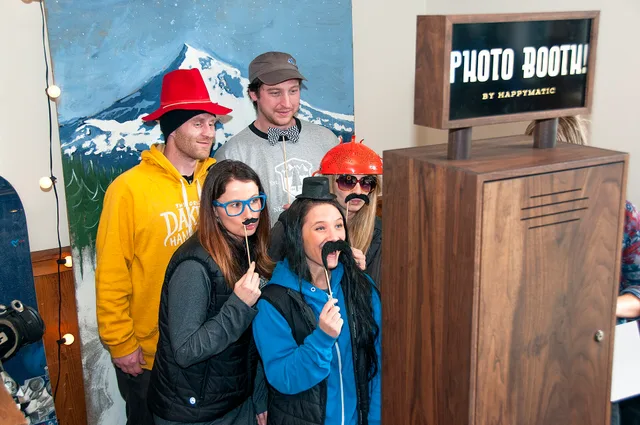
Props turn a plain booth into a photo stop. Enclosed and open-air booths have different footprints and power needs, and the photo booth overview on Wikipedia explains the basic types. Pick props that fit your booth style and your audience.
Prop Selection Checklist
- Washable hats and boas
- Sturdy frames and signs
- No unlicensed logos
- A bin for dirty props
- Clean props after every show
- Replace worn items before they look shabby
For corporate shows, use branded frames, dry erase signs, and simple hats. For weddings and parties, boas, oversized glasses, and chalkboard signs work. Avoid unlicensed logos, fragile items, and anything that needs constant repair.
Choosing Props
- Washable hats and boas
- Sturdy frames and signs
- No unlicensed logos
- A bin for dirty props
Clean props after every show. Replace worn items before they look shabby in photos. Pack props in labeled cases so setup is fast.
Lead Capture at a Photo Booth Trade Show Booth
A photo is a reason to stop, but a lead is the real goal. Use a badge scanner, a tablet form, or a QR code. Ask one qualifying question before the photo. The answer tells you if the lead is worth a follow up.
Lead Capture Workflow
- Scan badges or collect contact details
- Offer branded digital photo by email or text
- Ask one qualifying question at the booth
- Log notes in a CRM the same day
- Send a follow up within 48 hours
Lead Capture
- Scan badges or collect contact details before the photo.
- Offer a branded digital photo by email or text.
- Ask one qualifying question at the booth.
- Log notes in a CRM the same day.
- Send a follow up within 48 hours.
A qualifying question that works for a rental business is: "Do you have an event in the next six months that needs a photo booth?" A yes, the event type and the month go straight into the notes field. Those three answers decide which package you send in the follow up.
Trade show lead capture tools like iCapture, Zuant, and Captello can scan badges and push data to a CRM. Choose one that exports to the CRM you already use, whether that is HubSpot, Salesforce or a plain spreadsheet, and map the fields before the show: name, company, email, event type, event month and the qualifying answer. Test a scan-to-CRM export before the show floor opens.
Follow-up emails are marketing email, so the CAN-SPAM Act applies. The Federal Trade Commission's CAN-SPAM compliance guide warns that each separate email in violation is subject to penalties of up to $53,088 per message. It also says every message must include a clear and conspicuous explanation of how the recipient can opt out of future marketing email, and you must honor an opt-out request within 10 business days. Build the opt-out link into the template you send the photo with, before the show.
Example: A Two-Person Booth Setup That Sells
Two staff run a 10 by 10 booth. One greets and scans badges. The other runs the photo booth and swaps props. A table holds clean props and a sign with the photo delivery promise.
The booth has a backdrop, two lights, a camera, a printer, and a tablet. A small rack holds hats and boas. A bin under the table holds dirty props. The team offers a digital photo by text and a printed strip as a takeaway.
This setup keeps the line moving. It also makes lead capture part of the photo routine. No one waits while a form is filled out.
The sale happens at the table, not in the booth. While the guest's photo prints, the greeter names the package that fits the event type from the qualifying answer, hands over a card listing the packages exactly as your website names them (for example a wedding package, a corporate activation package and a dry-hire package), and books a call date rather than quoting on the floor. That keeps pricing conversations for the follow up, when you know the date, venue and hours.
Run the build in the same order every show: confirm the booth number and power drop, set the backdrop and lights, mount the camera and printer, test a full print, then lay out the prop table and the scanner. Break down in reverse and pack props into the labeled cases before anything else leaves the hall.
Trade Show Booth Rental and Equipment Planning
Renting a booth shell, carpet, and furniture can cut shipping and storage costs. Buying a photo booth and props can pay off if you exhibit often. Compare rental and purchase quotes for each show.
Use the SBA market research guide to compare rental product types and customer preferences before you commit to a booth theme. That research also helps you set a prop budget and a target number of leads.
Check the show manual for rules on power, rigging, and signage. Order services before the deadline. On-site orders often cost more and may sell out.
Selling to Canadian Exhibitors and Venues
US vendors can sell photo booth rentals to Canadian exhibitors at US shows. Canadian buyers may ask about tax, shipping, and cross-border contracts. Keep your terms clear about duties, currency, and cancellation: state which currency the quote is in, who pays any customs charges if equipment crosses the border, and how a cancellation refund is converted. Follow-up email to Canadian leads also falls under Canada's Anti-Spam Legislation (CASL), which is stricter about consent than CAN-SPAM, so record at the booth that the guest agreed to hear from you.
If you also sell north of the border, read our guide to Toronto or Vancouver for selling booths to trade shows. It covers venues, organizers, and permits for the Canadian market.
Measuring Photo Booth Vendor Trade Show ROI
Total cost includes booth space, travel, props, lead capture, and follow up. Count qualified leads, not just badge scans. A qualified lead has a budget, a need, and a timeline.
Divide total cost by qualified leads for a simple per-lead figure. Then track how many leads become paid bookings. If the per-lead cost is too high, change the show, the booth size, or the prop mix.
Follow up fast. A lead that waits a week may forget your booth. A short email with the photo and a clear next step works well.