Guides
Marketing a photo booth rental business: what brings customers
Photo booth rental marketing bounded by staffed capacity: design the offer, work the venue channel first, keep claims truthful and measure bookings by source.
What to take away
- Growth here is bounded by staffed capacity. Marketing that fills dates you cannot serve is a cost, not a win.
- The venue channel outperforms everything else in a local market, because coordinators are asked for supplier names constantly.
- Design the offer before the campaign. Most lost bids are lost on unclear inclusions, not on price.
- Speed of reply converts more enquiries than any amount of advertising spend.
- Marketing has a season. Demand generation for a summer wedding happens the previous autumn and winter.
- Photograph your own setups at real events, because stock booth images make every operator look identical.
- Ask for reviews plainly, and never pay for one or trade anything of value for a rating.
Start with the offer, not the channel
Write down what you sell as a client would read it: how long, what arrives, who runs it, what the client must provide, and what it costs. If you cannot do that in a paragraph, no channel will fix the result.
A package that takes ninety minutes to build limits which venues you can serve. A package promising same-night galleries commits somebody to work after midnight. The offer and the operations standard have to agree, or you will sell things that make your team miserable.
Set the price from your costs and from the scarcity of prime dates rather than from a competitor's page. The rate card and pricing work belongs before the marketing work, not after it.
The channels, in the order they pay
- Venues and event suppliers, who refer constantly and cost nothing but behavior.
- Your Google Business Profile, complete and current, with your own photographs.
- Your site, with prices, real galleries and clear service areas.
- Reviews, gathered honestly and answered in public.
- Wedding fairs, The Knot, WeddingWire, PartySlate and comparable directories, treated as tests with a budget and an end date.
- Paid advertising, last, and only once the reply process is fast.
The order matters more than the list. Operators who start at six and never do one spend the most for the least, because paid traffic arriving at a slow reply is money spent annoying strangers.
Channel priority order
- Venues and event suppliers first
- Business listing complete and current
- Site with prices and galleries
- Reviews gathered and answered publicly
- Wedding fairs and directories as tests
- Paid advertising last, fast reply first
Within local visibility, work by return: a complete business listing first, then the venue relationships, and paid advertising last.
Why the venue channel is different
A couple books once. A coordinator books dozens of events a year and is asked for recommendations at almost every viewing. Getting on that list is not a sales exercise, it is an operational one: arrive inside the access window, tape your cables, keep the queue off the dance floor, break down quietly, and leave the room clean.
Do that consistently and coordinators recommend you because recommending you is safe for them. That is the whole mechanism, and it is why a smooth workflow from booking to delivery is a marketing asset rather than an admin one.
Keep a short list of the venues you work at most, check it every season, and ask each of them once a year whether their approved supplier list is being reviewed.
Say only what you will deliver
Unlimited prints, instant sharing, free travel and next-day galleries are all claims a client can hold you to. The Federal Trade Commission's advertising guidance for small business sets out the expectation that claims are truthful and capable of being backed up. Run your own price page through that test before a disappointed client does.
Reviews have rules. Ask every client plainly when the gallery lands, and do not pay for reviews or trade a discount for a rating, or have staff or family post as customers.
The agency's separate guidance on soliciting and paying for online reviews covers what marketers should do, including disclosure when something of value is involved.
Answer negative reviews briefly and factually. A calm reply reassures a hesitant reader more than the complaint discourages them.
Marketing to a seasonal calendar
Wedding decisions are usually made months ahead, so the work that fills your summer happens in the previous autumn and winter. Corporate work books shorter. Community and school events cluster.
Plan the year backwards
- Autumn and winterFill next summer's weddings
- Quiet monthsVenue visits and listing refresh
- Quiet monthsBuild photos, practical page, templates
- SummerUnloading a van every Saturday
Plan the year backwards from those patterns. Put the venue visits and the listing refresh in your quiet months, when you have time to do them properly, rather than in the season when you are unloading a van every Saturday.
Use the quiet months to build the assets too: photographs from your own events, a page answering the practical questions about space, power and setup time, and templates ready for the formats you sell. Those pages get read by coordinators, and almost nobody writes them.
Measure so you can stop guessing
Record how every enquiry heard about you, in their words, and count bookings by source each quarter. Most operators discover that a handful of venues produce the majority of the work and that the noisiest channel produces the least.
Then read the result against capacity. If prime dates are already full, the answer is not more marketing; it is price or another staffed unit. If the calendar is full of the wrong kind of work, the answer is a different segment.
Set two review points a year. In one, count bookings by source and decide where effort goes next. In the other, check that what you promise on the site still matches what you deliver, since offers drift as the business changes.
Put the work in the months you have time for it. Refresh the listing, write the practical page, visit venues and take photographs in your quiet season, because in July you will be unloading a vehicle every Saturday.
Typical numbers to compare against your own:
| Item | Typical range | What sets it |
|---|---|---|
| Cost per booking from a venue referral | near zero beyond travel | relationship upkeep, not ad spend |
| Cost per booking from paid social | $40 to $120 | your city, your targeting, your close rate |
| Sample monthly marketing budget | $150 to $400 | listing upkeep, prints, venue visits, one fair a year |
| Reply-time target | 2 hours in business hours, same day otherwise | who watches the inbox |
Feed the conclusion back into the business. Check the gear you bring to a venue suits the segment you are winning, and the prop and backdrop stock you source matches what those clients ask for.
Check that your registration and compliance standing and insurance cover the venues you are now entering. Sense-check the plan against the market your area actually gives you, not the one you would like.
The pages that do the selling
Most photo booth websites are a gallery and a contact form, which asks the visitor to do all the work. Four pages change that.
Four pages that sell
- Pricing page showing package shape
- Practical page on space, power, setup
- One page per format you sell
- One page per service area you cover
A pricing page that shows the shape of your packages, even without every number, so a visitor can tell whether you are in their range before they enquire.
A practical page answering what venues and clients actually ask: how much space the booth needs, how long setup takes, what power you require, how many hours are typical, and what arrives afterwards. Coordinators read this page and almost nobody writes it.
A page per format you sell, because someone searching for a video format is not searching for a print booth, and sending both to one page loses the specific enquiry.
A page per service area you genuinely cover, with real detail about the venues and the drive time. Write five honest ones rather than forty generated ones with the place name swapped, which read as filler to a person and add nothing.
Photographs you own
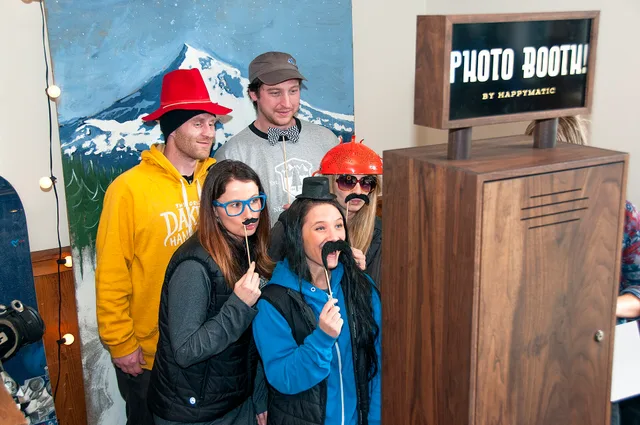
Manufacturer photographs make every operator look identical, which is exactly the wrong outcome for a business trying to be recommended by name. Photograph your own events instead: the booth in a real room, a finished print with the template on it, the prop kit laid out, the queue.
Ask permission for anything with recognizable guests in it, and honor a request to remove an image without argument. A short line in your client terms covering this saves an awkward conversation later.
Those photographs do a second job. They show a coordinator how much space you take and how tidy your cabling is, which answers the question they were about to ask.
Enquiry handling as a marketing channel
Reply speed converts more enquiries than any budget. Write a template that answers the three questions every client has: whether the date is free, what is included, and roughly what it costs. Send it fast, in plain language, with one photograph of your own setup.
Several operators usually receive the same enquiry. A fast reply that states the price shape and includes a photograph of your own booth wins a large share of those bookings.
A wording that works:
"Hi Sam, thanks for asking about Saturday 12 June. The date is open. Our four-hour package includes setup, an attendant, unlimited prints and a gallery within 24 hours. It starts at [your price], and travel to [town] is included. I can hold the date until Friday. Want the full details?"
Then measure it. Log the time an enquiry arrived and the time of your first substantive reply, and read the median once a month. Operators who do this are usually surprised, and the fix is a process change rather than a purchase.
Follow up once, politely, after a few days. One follow-up recovers a meaningful share of quiet enquiries. A third and fourth do not, and they damage the impression you made.
Common questions
How much should I spend on marketing?
Less than most operators do, until the reply process, the listing and the venue relationships are working. After that, spend against a measured cost per booking rather than a percentage of revenue.
Are wedding fairs worth the cost?
They can be, in a market where venues attend as well. Treat one as a test with a fixed budget, count bookings rather than conversations, and decide on the second year with real numbers.
Should I discount to fill quiet dates?
Publishing a lower price for off-season and weekday dates is honest and effective. Quietly discounting a prime date because an enquiry hesitated teaches clients to wait.
What if I am fully booked but not making money?
That is a pricing problem wearing a marketing costume. Work out contribution per event, find the packages and distances that lose money, and change those before you buy another enquiry.